

The Process Moat
How red tape replaced results in rural Ontario—and why it’s costing more than time

Article 2 of a series by Mike Barcz
In my previous column, I introduced the Untouchables; the risk-free insiders who have captured our local governments. But to understand how they maintain their grip, we have to look at their primary weapon: the Process.
Rural Ontario used to value the builder. The person who showed up, assessed the problem, and fixed it.
Today, we have replaced that person with the compliance officer. We have built a process moat around our municipal offices, a deep, murky trench of red tape, legislative cross-referencing, and standard operating procedures designed not to facilitate progress but to prevent it.
For the modern municipal administrator, the goal is no longer to fix the bridge, pave the road, or approve the subdivision. The goal is to ensure the file is beyond reproach.
In this world, a project that is never started is a success as long as the paperwork is filed correctly.
Conversely, a project finished ahead of schedule and under budget becomes a liability if a single provincial guideline was not cited in a 40-page staff report.
What we have is governance as a defensive crouch. They are not building a community. They are building a legal defence fund.
By the time a project survives the gauntlet of environmental assessments, heritage impact studies, and multi-stage visioning exercises, the original need has often passed and the budget has doubled. Nobody gets fired for that.
Nobody even gets questioned.
What should concern every rural taxpayer is that this outcome whether it’s a delayed project, an abandoned initiative, or ballooning cost, is not a failure of the system. It is the system working exactly as the people running it intend.
The greatest casualty of the process moat is common sense.
In an earlier era, if a culvert washed out, a road superintendent and a backhoe operator fixed it. Today, that same culvert requires a hydrological study, a consultation with three provincial agencies, and a climate resiliency audit. The problem does not change. The water does not wait. But the file must be complete.
The insider loves this complexity because complexity is their job security. If the rules are simple, any engaged citizen can see when they are being broken. But when the rules are a labyrinth of interconnected frameworks and policy statements, the insider becomes the high priest. You cannot challenge them because you have not read the 600-page Provincial Policy Statement or the Municipal Act subsections they keep tucked in their back pocket like a shield.
They do not wield that document to help you.
They wield it to end the conversation.
This is not accidental. Complexity scales with the number of people needed to interpret it. Every new layer of policy justifies another position, another salary, another pension. The bureaucracy does not grow despite the complexity. It grows because of it.
This stagnation carries a human cost that rarely appears in any staff report.
It is the young family waiting three years for a severance to build a home on their parents’ farm. It is the small business owner who abandons an expansion because the site plan control process costs more than the renovation itself. It is the farmer who needed a drainage permit in April and received approval the following March, long after the season had passed and the opportunity with it.
The insider does not feel any of that. They are on a salary while you are on a clock. They have a pension while you carry a mortgage. Every day they spend reviewing the file is a day they are paid while you are losing money, momentum, and faith in the place you chose to build your life.
There is a cruelty to that arrangement that we have been far too polite to name.
We have been conditioned to treat delays as neutral, as if waiting is simply the price of doing things properly. It is not neutral. It redistributes cost from institutions to individuals, from the protected to the exposed, from those who earn a salary reviewing problems to those who earn a living solving them.
We are told this bureaucracy exists for our protection.
It does not.
It protects the administrator from the consequences of a decision. It protects the department head from accountability. It protects the consultant who charges $40,000 to produce a report no elected official will ever read in full. It is an insurance policy written by insiders, administered by insiders, but paid for by the people who can no longer afford the premiums.
The truly damaging part is that many of the people operating within this system are not malicious. Some are talented. Some genuinely believe that the process serves the public. But a system does not need bad intentions to produce bad outcomes. It only needs to reward the wrong behaviour, and this one does that with exceptional consistency.
The person who moves a file quickly and gets a project built takes on personal risk. The person who moves it slowly, who requests three additional studies and defers the decision to the next council term, faces none. The incentives are perfectly inverted.
If we want to save rural Ontario from this managed decline, we have to change what we measure and what we reward.
We need to stop measuring municipal success by the thickness of a staff report and start measuring it by the velocity of action. A department that approves twenty small business permits in six weeks has done more for a community than one that spent the same period commissioning a downtown revitalization framework.
We need a red tape sunset as a standing policy. Any process that a department head cannot justify in plain language to a room full of farmers and tradespeople should be abolished.
Not reviewed.
Not reformed
Abolished. The burden of proof belongs to the process, not to the people it inconveniences.
We need to stop promoting the professional survivor, the career administrator who has mastered the art of keeping their head down and their file clean and start hiring the operator who knows how to get something built and is willing to stake their reputation on it.
Most importantly, we need elected officials who understand that approving a complex process is not the same as governing.
Signing off on another study is not leadership. Leadership is telling your staff that the culvert needs to be fixed by Friday and meaning it.
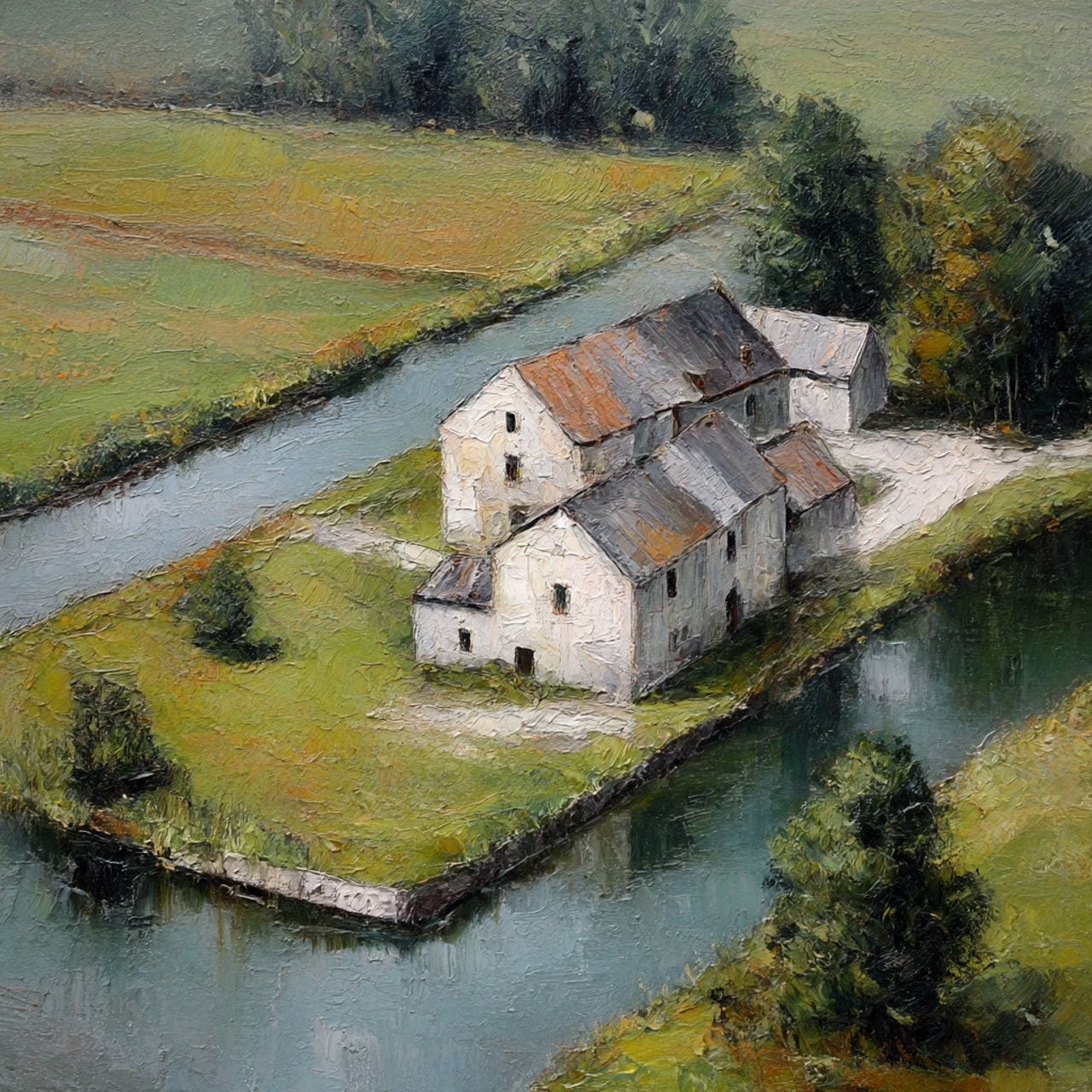
The moat is rising. The farmhouse is surrounded. And the people inside are being told the water is fine.
It is time to start draining it or we will drown.
Watch for the Next article in this series which will be published on Gather 2030.
All governments, federal, provincial, regional and municipal are incorporated. We no longer have government for the people by the people. The elected swear allegiance to the corporation.
Thank you for this succinct explanation of the system.